
Aktivitäten in Kaifeng
Entdecke die besten Erlebnisse
Top 10 Attraktionen in Kaifeng


Millennium City Park
Der Qingming Shanghe-Park liegt am Longting-See in Kaifeng und ist ein großer historisch-kultureller Themenpark der Song-Dynastie, der nach dem berühmten Gemälde „Qingming Shanghe Tu“ des Malers Zhang Zeduan aus der Song-Zeit im Maßstab 1:1 rekonstruiert wurde. Der Park ist durch die Shuangting-Brücke in zwei Bereiche unterteilt: Der südliche Teil zeigt das lebhafte Stadtleben der damaligen Hauptstadt Bianjing mit Weinstuben, Teehäusern, Pfandhäusern und Handwerksbetrieben entlang der Straße, durch die sich Lastenträger und ruferische Kellner bewegen. Der nördliche Teil hingegen ist ein kaiserlicher Garten mit am See gelegenen Hallen wie der Linshui-Halle und dem Sifang-Hof. Die Mitarbeiter und Händler im Park tragen Song-zeitliche Kleidung, und mit alten Klängen und dem Schlag von Glocken und Trommeln entsteht leicht der Eindruck, „mit einem Schritt in das Gemälde einzutreten und für einen Tag tausend Jahre zurückzuträumen“. Die Architektur ist hier ein visuell erfahrbarer Höhepunkt: Die den Bian-Fluss überspannende Regenbogenbrücke ist eine Nachbildung der berühmten Brücke aus dem Gemälde, ihre bogenförmige Gestalt erinnert an einen Regenbogen, und der Blick von der Brücke auf die vorbeifahrenden Transportschiffe vermittelt ein authentisches Gemäldegefühl. Der Fuyun-Pavillon überragt alle anderen Gebäude im Garten, mit seinem hoch aufragenden roten Turm und goldenen Dachziegeln an den vier Ecken – von hier aus hat man einen Panoramablick über den gesamten Garten. Das Shangshan-Tor wurde nach dem Vorbild des Stadttors von Dongjing aus der Nördlichen Song-Dynastie rekonstruiert, majestätisch und prächtig bemalt, es ist das imposanteste Tor des Gartens. Pavillons und Brücken wie der Shuixin-Pavillon, die Doppelpavillon-Brücke und die Neun-Drachen-Brücke sind malerisch zwischen den smaragdgrünen Wellen verteilt. Der Höhepunkt des Tages sind die im ganzen Park verteilten szenischen Aufführungen: „Beamte Bao inspiziert den Bianhe-Wassertransport“ wird auf dem Wasser beidseits der Regenbogenbrücke aufgeführt, „Gutsherr Wang sucht einen Schwiegersohn“ bringt das Werfen des Brautballs auf die Straße, und „Yue Fei besiegt Prinz Liang“ zeigt staubaufwirbelnde Pferde auf dem Exerzierplatz. Dazwischen gibt es folkloristische Darbietungen wie Hahnenkämpfe, Stelzenlaufen, Cuju (antikes Fußballspiel) und Trommeln. Familien mit Kindern können den Quyuan-Park und die Spiele der Song-Dynastie besuchen, um Darts, Bogenschießen, Seilklettern und Reifenspringen auszuprobieren – alles Spiele aus der Song-Zeit vor 1000 Jahren. Oder sie können im Sifang-Hof historische Gewänder anziehen und in die Prüfungszellen eintreten, um die kaiserliche Prüfung der Song-Dynastie zu erleben. Handwerksbetriebe wie Stickerei aus Bian, Holzschnitt-Neujahrsbilder aus Zhuxianzhen, offizielle Keramik und Teigfiguren befinden sich direkt an der Straße, wo man den Handwerkern bei der Arbeit zusehen kann. Nach Einbruch der Dunkelheit zeigt der Park ein ganz anderes Gesicht: Rote Laternen leuchten nacheinander auf, die Straßen sind hell erleuchtet und wirken wie ein völlig anderer Ort im Vergleich zum Tag. Die große Wassershow „Das goldene Zeitalter der Song-Dynastie: Traum von Kaifeng“ wird auf dem Jinglong-See aufgeführt. Das Stück verbindet acht klassische Gedichte der Song-Dynastie mit dem berühmten Gemälde „Auf dem Fluss während des Qingming-Fests“ und entführt die Zuschauer in das Kaifeng der Nördlichen Song-Dynastie vor tausend Jahren. Die Aufführung dauert etwa 70 Minuten, und viele Touristen planen ihren Besuch extra für den Abend, um diese Show zu erleben. Nach der Vorstellung lohnt es sich, die Stadtmauer des Shangshan-Tors zu besteigen, um den beleuchteten Park und die nächtliche Kulisse von Kaifeng von oben zu genießen. Im Park gibt es auch gute Essmöglichkeiten: Die Snackstraße und der Nachtmarkt im Gebiet von Dongjing Shifang bieten eine Vielzahl von Kaifeng-Spezialitäten wie gefüllte Suppenbrötchen und Hammelfleisch-Kangmo, perfekt zum Essen beim Bummeln. Wer sich hinsetzen und eine richtige Mahlzeit genießen möchte, kann das Sun Yang Zhengdian besuchen, das nach dem Vorbild der "Zhengdian" aus alten Gemälden nachgebaut wurde, und dort traditionelle Henan-Gerichte wie gefüllte Suppenbrötchen und gebratene Nudeln mit Karpfen probieren.Kaifeng · 3,3 km vom Stadtzentrum

Wansuishan Martial Arts City
Der Wansui Shan Wuxia Park befindet sich im Nordwesten der Stadt Kaifeng.Wansuishan TouristenattraktionEs ist ein großer Freizeitpark, der auf der Kultur der Song-Dynastie und der Kampfkunstkultur basiert. In der Touristenattraktion gibt es malerische Gassen und Gärten im Stil der Song-Dynastie, das ganze Jahr über spannende Kampfkunst- und historische Aufführungen sowie zahlreiche Freizeiteinrichtungen. Es ist ein beliebtes Ausflugsziel zur Entspannung und Unterhaltung in der Umgebung von Kaifeng und Zhengzhou. Beim Besuch der Wansui Shan Martial Arts City fällt zunächst die malerische Landschaft der Touristenattraktion ins Auge. Die Anlage schafft insgesamt eine Atmosphäre der Song-Dynastie – besonders beeindruckend sind der Wansui-Tempel, der die Pracht uralter Song-zeitlicher Klosteranlagen wiederbelebt, der Longtan-Altar als Symbol der Harmonie von Buddhismus, Konfuzianismus und Taoismus, die weltweit einzigartig gut erhaltene Stadtmauer aus Ming- und Qing-Zeit sowie die "Neun-Drachen-Wasserfälle", eine der größten künstlichen Wasserfall-Landschaften Chinas. Besonders wertvoll sind die ausgedehnten Wald- und Grünflächen der Anlage, die eine friedvolle Atmosphäre bieten. Zur passenden Jahreszeit blühen hier unzählige Blumen – ein ideales Fotomotiv. Danach werden die Besucher die einzigartigen Kampfkunst-Elemente der Touristenattraktion bemerken. Hier werden das ganze Jahr über 36 Stücke (etwa 60 Vorstellungen täglich) mit Kampfkunst-Themen aufgeführt. Einige der thematischen Stücke wie "Kreuzhang", "Wu Song betrunken schlägt Jiang Menshen" und "Wildschweinwald" sind besonders beeindruckend und sollten auf keinen Fall verpasst werden. Interaktive Aufführungen wie die "Kampfkunst-Film-Erlebnis-Halle", "Der Kampfkunst-Meister" und "Li Kui löst einen Fall" ermöglichen es den Touristen, in die Kampfkunst-Geschichten einzutauchen, was sehr unterhaltsam ist. Auch in der Architektur der Attraktion finden sich viele Kampfkunst-Elemente. Besonders markant sind der "Kampfkunst-Pfad" mit großen Waffen wie dem "Himmelsschwert" und dem "Tyrannenmesser", die "Ritterbilder" der "Großen Song-Kampfkunstschule", der "Schwertaltar" am Kreuzhang, das "Versammlungshaus der Edlen" und der "Kampfkunst-Veranstaltungsort". Außerdem während der Frühlingsfest-Saison jedes JahrWansuishanEs werden große Tempelfeste veranstaltet, mit spektakulären Aufführungen, einer Vielzahl von lokalen Spezialitäten, kunstvollen Handwerksarbeiten und einzigartigen Unterhaltungsveranstaltungen. Die lebhafte Atmosphäre hat sie zu einem der beliebtesten Tempelfeste in der zentralen Ebene Chinas gemacht.Kaifeng · 4,6 km vom Stadtzentrum

Song Du Huangcheng Cultural Tourism Resort
Das Songdu Kaiserpalast Tourismusresort liegt im Norden der Altstadt von Kaifeng, genau an der Stelle, wo sich der Kaiserpalast der östlichen Hauptstadt der Nördlichen Song-Dynastie befand. Die seit tausend Jahren unveränderte städtische Hauptachse von Kaifeng verläuft durch dieses Gebiet, das das Herzstück der kaiserlichen Kultur der Song-Hauptstadt darstellt. Hier vereinen sich die Song-zeitlichen Palastgebäude der Longting-Touristenattraktion, die Geschichten der Yang-Familie aus dem Tianbo Yang-Anwesen und die kalligraphischen Steinstelen des Chinesischen Hanlin-Steingartens. Die historischen Viertel der Shuanglong-Gasse, der 960-Kulturpark und das Qisheng-Eck haben die alten Gassen und Höfe in ein Song-zeitliches Viertel verwandelt, das zum gemütlichen Bummeln einlädt. Das Resort verbindet auch eine Reihe von Sehenswürdigkeiten der Song-Kultur: In der Wansui Shan Great Song Martial Arts City werden das ganze Jahr über Martial-Arts-Vorstellungen und das immaterielle Kulturerbe der Eisenblüten aufgeführt. Historische Stätten wie der Eisenpagode, die Stadtmauer von Kaifeng, die Zhouqiao- und Bianhe-Ruinen, die Shan-Shan-Gan-Gilde, der Yanqing-Tempel und der Fan-Pagode sind über die Altstadt verstreut, dazu kommen weniger bekannte Orte wie ein unterirdisches Getreidelager für den Kriegsfall. Diese Orte sind schwer an einem Tag zu erkunden, daher empfiehlt es sich, zwei oder drei Schwerpunkte zu setzen. Nachts gibt es ein ganz anderes Erlebnis: Wenn die Lichter der Sehenswürdigkeiten aufleuchten, ist eine Bootsfahrt auf dem Kaiserkanal der Song-Dynastie in einem bemalten Boot sehr beliebt, bei der man die Lichterreflexe der Pavillons und Gebäude an den Ufern auf dem Wasser tanzen sieht.Kaifeng · 4,2 km vom Stadtzentrum

Kaifeng Fu (Kaifeng Palace)
In der Nördlichen Song-Dynastie war Kaifeng der Sitz der Präfektur, in der Bao Zheng, auch bekannt als "Bao Qingtian", als Präfekt gedient hatte. Die ursprüngliche Präfektur von Kaifeng aus der Song-Zeit wurde bereits durch Überschwemmungen zerstört. Was die Touristen heute sehen, ist eine in den letzten Jahren rekonstruierte, künstlich angelegte Nachbildung einer historischen Stätte. Das Tor der Kaifeng-Präfektur zeigt nach Süden, und Touristen betreten hier die Touristenattraktion, um ihre Besichtigung zu beginnen. Die Attraktion ist entlang einer zentralen Achse mit Gebäuden wie der Haupthalle, der Beratungshalle und der Pflaumenblütenhalle angeordnet, flankiert von der Kaifeng-Präfektur - Tianqing-Tempel, der Mingli-Akademie, der Kaifeng-Präfektur - Qianlong-Palast, dem Qingxin-Pavillon,Gefängnis, die Yingwu-Halle, das Gästehaus Yin und andere große und kleine Hallen. Jede Halle ist nicht besonders groß. Touristen können nach dem Besuch der Sehenswürdigkeiten entlang der Hauptachse anhand der Karte der Touristenattraktion zu einigen Sehenswürdigkeiten an den Seiten weitergehen. Touristen können in der Haupthalle und den Beratungsräumen entlang der zentralen Achse die Innenräume eines Regierungsgebäudes aus der Nördlichen Song-Dynastie besichtigen. Im nordwestlich gelegenen Meihua-Pavillon der Touristenattraktion befindet sich eine Nachstellung der Szene, in der Richter Bao Gong „mit dem Rücken nach Süden sitzend“ Recht sprach, sowie Wachsfiguren von Bao Gong bei der Urteilsverkündung. Westlich des Haupttors sind Gefängniszellen, der Kaifeng-Gefängnistempel, Todeszellen sowie Männer- und Frauengefängnisse nachgestellt, die mit Skulpturen, Folterinstrumenten und verschiedenen Szenen aus der Gefängnisverwaltung der Nördlichen Song-Dynastie ausgestattet sind. In den östlich der Hauptachse gelegenen Gebäuden Qianlong-Halle und Qingxin-Pavillon können Touristen Statuen der drei Kaiser Taizong, Zhenzong und Qinzong der Song-Dynastie sowie biografische Informationen über die Kaifeng-Präfekten aus der Nördlichen Song-Dynastie sehen. Touristen können beim Besuch der Touristenattraktion auch viele historische Aufführungen wie die „Amtseinführungszeremonie“ und „Richter Bao fällt ein Urteil“ genießen.Kaifeng · 3,7 km vom Stadtzentrum

Bian River Cruise
Yu-FlussMit einer Länge von etwa 2500 Metern verbindet sie die beiden Haupttouristenattraktionen von Kaifeng, den Longting-See und den Baogong-See. Die Umgebung ist landschaftlich reizvoll und kulturell tiefgründig. Rund um den Longting-See gibt es eine 5A-Touristenattraktion, zwei 4A-Touristenattraktionen und eine 3A-Touristenattraktion. Am Grund des Sees schlummert ein nationaler Schatz von tausend Jahren – die Ruinen des Palastes aus sechs Dynastien. Neben dem Baogong-See befinden sich zwei 4A-Touristenattraktionen und eine national geschützte Stätte. An beiden Seiten des Yuma-Kais befindet sich der Xisi-Nachtmarkt. Die Bootsfahrt auf dem Bian-Fluss verbindet als Bindeglied nahezu alle Touristenattraktionen in Kaifeng organisch miteinander.Yu-FlussMit einer Gesamtinvestition von fast 550 Millionen Yuan wurde das Wasserstraßensystem des Longting-Sees, des Bao Gong-Sees und des Qingming Shanghe Gartens verbunden, wodurch zwei große Touristenattraktionen der alten Stadt miteinander verknüpft wurden. Dies spielt eine entscheidende Rolle im Wassersystem der Song-Dynastie. Die Stadtregierung hat diesem Projekt große Bedeutung beigemessen, es hochrangig geplant, mit erheblichen Mitteln ausgestattet und qualitativ hochwertig umgesetzt. Die Bootsfahrt auf dem Bian-Fluss wurde so zu einer beeindruckenden Sehenswürdigkeit in Kaifeng entwickelt.Kaifeng · 3 km vom Stadtzentrum

Daxiangguo Temple
Der Daxiangguo-Tempel, ursprünglich Jianguo-Tempel genannt, ist der Ort, an dem Lu Zhishen im Roman "Die Räuber vom Liangshan-Moor" eine Weide mit bloßen Händen ausriss. Der Tempel wurde erstmals im Jahr 555 während der Nördlichen Qi-Dynastie unter Kaiser Wenxuan erbaut. Im Jahr 712, dem ersten Jahr der Regierungsperiode Yanhe der Tang-Dynastie, benannte Kaiser Ruizong Li Dan den Tempel in "Daxiangguo-Tempel" um, um seine Thronbesteigung vom Rang eines Prinzen zum Kaiser zu gedenken, und schrieb persönlich die Inschrift für das Tempelschild. Der Tempel erreichte während der Nördlichen Song-Dynastie seine Blütezeit und war damals ein kaiserlicher Tempel. Der heutige Daxiangguo-Tempel besteht größtenteils aus Gebäuden, die in den letzten Jahren rekonstruiert wurden. Die Anlage ist auch viel kleiner als in ihrer Glanzzeit. Nach dem Betreten des Tempeltors folgen nacheinander die Halle der Himmlischen Könige, die Große Helden-Halle, die Halle der Fünfhundert Arhats und die Sutren-Bibliothek. Die Arhat-Halle im Tempel, im Volksmund auch „Halle der Fünfhundert Arhats“ genannt, ist ein achteckiges Gebäude mit umlaufendem Gang. Im Gang befindet sich eine große Gruppenstatue mit dem Titel „Shakyamunis Predigtversammlung“, bei der die fünfhundert Arhats in unterschiedlichen, lebendigen Posen dargestellt sind. In der Mitte der Arhat-Halle können Touristen auch einen achteckigen Pavillon aus Holz bewundern, in dem eine etwa 6 Meter hohe Holzstatue der „Viertausendarmigen und -äugigen Guanyin“ steht. Die Statue ist ein Kulturrelikt aus der Qianlong-Ära der Qing-Dynastie und wurde aus einem einzigen Ginkgo-Baum geschnitzt. Jede Seite der Statue weist sechs große Arme und über 200 kleine Arme auf, wobei jede kleine Handfläche ein Weisheitsauge trägt – insgesamt über tausend, daher der Name „Tausendarmige und -äugige Buddha“. Die Sutrenbibliothek befindet sich im hinteren Teil des gesamten Tempelkomplexes und dient heute als Veranstaltungsort der Kaifeng-Akademie für Kalligraphie und Malerei. Das Gebäude ist mit Kunstwerken verschiedener Stile in Kalligraphie und Malerei ausgestattet, die Besucher bewundern oder erwerben können. Im Glockenturm hängt zudem eine große Bronzeglocke, die während der Regierungszeit von Kaiser Qianlong der Qing-Dynastie im Jahr 1768 gegossen wurde. Diese Glocke ist ein wertvolles Kulturgut des Tempels.Kaifeng · 4,4 km vom Stadtzentrum

Iron Pagoda Park
KaifengDer Eisenpagodenpark, der in Kaifeng in der Provinz Henan liegt, ist eine umfassende Touristenattraktion, die Geschichte, Kultur und Naturlandschaften vereint. Der Park ist bekannt für die während der Nördlichen Song-Dynastie erbaute...Kaifeng EisenpagodeIm Herzen der Stadt steht dieser Turm nicht nur als herausragendes Beispiel der antiken chinesischen Architektur, sondern auch als wichtiges Zeugnis der Geschichte von Kaifeng. Mit seinem einzigartigen Baustil und meisterhafter Handwerkskunst zieht der Eisenturm unzählige Besucher an. Im Eisenpagoden-Park können Touristen auf von Bäumen gesäumten Pfaden spazieren und die Ruhe der alten Hauptstadt sowie die Schwere der Geschichte spüren. Der Park beherbergt auch mehrere Kultur-Ausstellungshallen, die historische Relikte und Materialien im Zusammenhang mit der Eisenpagode präsentieren. So können Besucher nicht nur die schöne Landschaft genießen, sondern auch die Geschichte hinter diesem alten Turm tiefgründig verstehen. Darüber hinaus veranstaltet der Park regelmäßig verschiedene kulturelle Veranstaltungen und Festivals, wie traditionelle Musikaufführungen und Kalligrafieausstellungen, die den Besuchern ein reichhaltiges kulturelles Erlebnis bieten. Ob Geschichtsinteressierte oder Besucher, die Entspannung suchen,KaifengDer Eiffelturm-Park bietet ein unvergessliches Besuchserlebnis. Hier tritt man mit jedem Schritt auf den Widerhall der Geschichte und erblickt mit jedem Blick die Schätze der Kultur.Kaifeng · 6 km vom Stadtzentrum

Longting Scenic Area
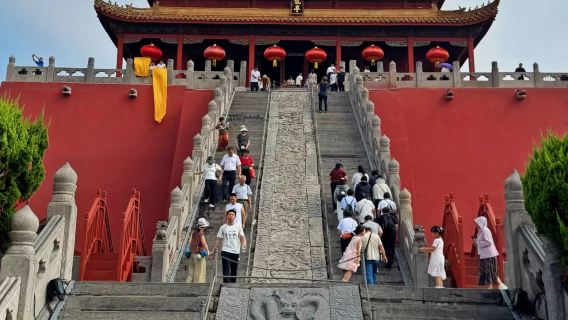
Die Longting-Touristenattraktion ist eine bekannte Sehenswürdigkeit in der alten Stadt Kaifeng und ein repräsentatives Beispiel für die historischen Relikte der Stadt. Eigentlich handelt es sich dabei jedoch nicht um einen Pavillon, sondern um eine Halle, die auf einem riesigen blauen Ziegelsockel von 13 Metern Höhe erbaut wurde. Heute bilden die Longting-Touristenattraktion sowie der Yangjia-See und der Panjia-See gemeinsam den Longting-Park. Dieser Ort war einst die Ruine des kaiserlichen Palastes der Späteren Liang-, Jin-, Han- und Zhou-Dynastien während der Fünf Dynastien sowie der Nördlichen Song-Dynastie und der Jin-Dynastie. Die Longting-Touristenattraktion liegt nach Süden ausgerichtet und thront auf einem Sockel. Vom Boden bis zur Halle führen 72 Stufen, in deren Mitte sich steinerne Stufen mit geschnitzten Wolken-Drachen-Mustern befinden. Nach dem Erklimmen der Plattform und dem Betrachten der ausgestellten Kulturgegenstände in der Halle kann man an den Steinbalustraden die Aussicht auf die Altstadt von Kaifeng genießen. Vor der Longting-Touristenattraktion verläuft eine gerade Allee, an deren Seiten sich zwei Seen gegenüberliegen: der Panjia-See im Osten und der Yangjia-See im Westen. An der westlichen Seite unter den Treppen der Longting-Touristenattraktion befinden sich mehrere Nebenhallen. In einer dieser Hallen gibt es ein Wachsfigurenkabinett, das die Geschichte der Song-Dynastie darstellt. Neun Gruppen von Wachsfiguren veranschaulichen bedeutende politische, wirtschaftliche und kulturelle Ereignisse während der Regierungszeit der neun Kaiser der Nördlichen Song-Dynastie. Die Wachsfiguren sind alle sorgfältig nach historischen Fakten gestaltet. Besonders auffällig ist die Gruppe von Wachsfiguren, die die Reformen von Wang Anshi darstellt, mit nur drei Hauptfiguren. In der Mitte thront der sechste Kaiser der Nördlichen Song-Dynastie, Zhao Xu (Kaiser Shenzong), auf dem kaiserlichen Thron. Er trägt ein hellgelbes Drachengewand mit einem roten Jadegürtel und blickt leicht nach links, wo er einen Minister beobachtet und dessen Worten aufmerksam lauscht. Dieser Minister ist Wang Anshi, den Kaiser Shenzong zum Kanzler ernannt hatte und der die Reformen befürwortete. Auf der anderen Seite sitzt ein weiterer Minister, Sima Guang, der gegen die Reformen war und in diesem Moment in tiefes Nachdenken versunken ist. Jedes Jahr im goldenen Herbstmonat Oktober (Mitte Oktober bis Mitte November) dient der Longting-Park als Hauptveranstaltungsort des berühmten Kaifeng-Chrysanthemen-Kulturfestivals. Die Touristenattraktion ist mit einer beeindruckenden Kulisse geschmückt, wo Tausende von einzigartigen Chrysanthemensorten um die Wette blühen. Beim Besuch des Longting-Parks haben Touristen außerdem die Gelegenheit, historische Theateraufführungen zu erleben, die auf der Kultur des Song-Kaiserhofs basieren.Kaifeng · 4,1 km vom Stadtzentrum

China Han Yuan Stele Forest
Der Chinesische Steingarten Kaifeng, auch bekannt als Han Yuan Steingarten, befindet sich östlich des Qingming Shanghe Gartens in unmittelbarer Nähe.Longting-ParkDer Chinesische Han-Garten mit Steinstelen besteht aus zwei Hauptbereichen: dem Garten und dem Steinstelen-Korridor. Der Garten hat zwei Eingänge, ein Südtor in der Nähe des Gartenbereichs und ein Nordtor in der Nähe des Steinstelen-Korridors. Im Inneren befinden sich zwei künstliche Seen, der Han-Garten-See und der Südsee. Touristen können bequem entweder vom Süden nach Norden oder in umgekehrter Richtung durch den Garten spazieren. Beim Besuch der Steinstelen-Galerie im Park werden Sie von der Sammlung Tausender eingravierter Steinstelen beeindruckt sein – dies ist eine der größten privaten Steinstelen-Sammlungen Chinas. Hier können Sie repräsentative Kalligrafie-Meisterwerke verschiedener Dynastien bewundern, ebenso wie moderne Steinstelen-Galerien mit Werken in zeitgenössischen Schriftstilen wie Siegelschrift, Regelschrift, Kursivschrift, Grasschrift und Laufschrift. Kalligrafie-Enthusiasten haben hier die Gelegenheit, die künstlerische Brillanz zeitgenössischer Kalligrafie-Meister zu erleben. Die Anlage beherbergt zudem internationale Kalligrafie-Galerien, Malerei-Galerien sowie Kinder-Kalligrafie-Galerien. Regelmäßig finden verschiedene Kunstveranstaltungen statt, darunter Kalligrafie- und Malerei-Ausstellungen, Wettbewerbe, Künstlertreffen, Workshops und Lehrveranstaltungen. Im südlichen Teil des Chinesischen Han-Garten-Steinkunstmuseums befindet sich der Gartenbereich, in dem künstlich Berge, Wasserfälle, Felsformationen und Inseln angelegt wurden. Zusammen mit dem malerischen Han-Garten-See, dessen Wasser sanft plätschert, bietet sich hier eine wunderschöne Landschaft, die perfekt zum Entspannen geeignet ist. Touristen, die Ruhe suchen, können am See entlang spazieren und die umliegende Seen- und Berglandschaft bewundern oder eine Bootsfahrt unternehmen, um die Gartenlandschaft zu genießen. Gelegentlich finden im Gartenbereich auch traditionelle Aufführungen mit lokalem Flair statt (die genauen Programme und Zeiten können variieren und richten sich nach den Tagesinformationen der Touristenattraktion). Rund um den Nationalfeiertag jedes Jahres findet im Park eine große Chrysanthemenausstellung statt, bei der Zehntausende von Topfchrysanthemen bewundert werden können. Während des chinesischen Neujahrsfestes veranstaltet die Chinesische Han-Garten-Steinstelen-Galerie zudem einen großen Tempelmarkt, der von traditioneller Volkskultur geprägt ist.Kaifeng · 3,7 km vom Stadtzentrum

Kaifeng City Wall
Die alte Stadtmauer von Kaifeng erstreckt sich über eine Länge von 14,4 Kilometern. Im Laufe der Geschichte wurde sie mehrfach überflutet und im Jahr 1841 während der Regierungszeit von Daoguang in der Qing-Dynastie erneut repariert. Sie bewahrt noch immer die architektonischen Merkmale und Ausmaße aus der Yuan- und Ming-Dynastie. Um das historische und kulturelle Erbe der Stadt Kaifeng zu bewahren, begann die lokale Regierung 1994 mit der Renovierung der alten Stadtmauer. Gemäß den Plänen der Denkmalschutzbehörden wurden nach und nach mehrere Stadttore wiederhergestellt.Kaifeng · 2,5 km vom Stadtzentrum
Erlebnisse in Kaifeng, die du nicht verpassen darfst
Ausgewählte Kulturelle Erlebnisse in Kaifeng
Alle Kulturelle Erlebnisse anzeigen
5% Rabatt
Zeitlich begrenzt
ab 11.310,26 PHP11.905,54 PHP
5,0/5
· 1 BewertungKostenlose Stornierung
ab 376,65 PHP
![Über 1000 Führungen Erfahrung - Reiseleiter mit Gruppenführung - Tour im Henan Museum [Auch an Wochenenden und Feiertagen möglich]](https://ak-d.tripcdn.com/images/0354n12000sa1dyzlE0E9_C_568_320.jpg?_fr=wc)
5,0/5
· 1 BewertungKostenlose Stornierung
Jetzt für morgen buchen
ab 6.478,35 PHP
Kostenlose Stornierung
Sofortige Bestätigung
Jetzt für morgen buchen
ab 4.774,02 PHP

Kostenlose Stornierung
Sofortige Bestätigung
ab 2.212,81 PHP

Kostenlose Stornierung
Sofortige Bestätigung
Jetzt für morgen buchen
ab 5.056,50 PHP
Ausgewählte Speisen und Getränke in Kaifeng
Alle Speisen und Getränke anzeigen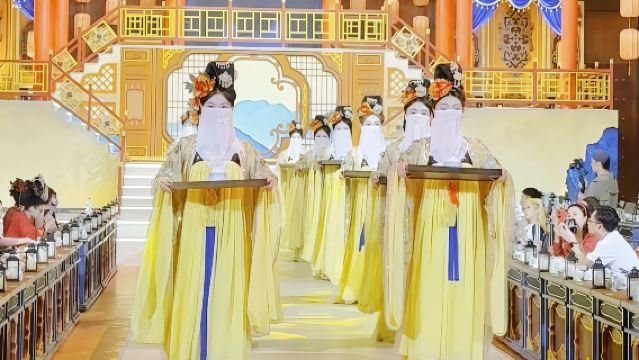
Kostenlose Stornierung
Sofortige Bestätigung
Jetzt für morgen buchen
ab 3.973,64 PHP

5,0/5
· 1 Bewertung· 85 gebuchtVon 61 Reisenden gespeichert
ab 4.096,05 PHP

ab 2.806,03 PHP

Kostenlose Stornierung
Sofortige Bestätigung
Jetzt für morgen buchen
ab 4.331,46 PHP
Kostenlose Aktivitäten in Kaifeng
Millennium City Park
Kaifeng · 3,3 km vom StadtzentrumSofort verfügbar, Jetzt für heute buchen, Jederzeit stornierbarWansuishan Martial Arts City
Kaifeng · 4,6 km vom StadtzentrumSofort verfügbar, Jetzt für heute buchen, Jederzeit stornierbarSong Du Huangcheng Cultural Tourism Resort
Kaifeng · 4,2 km vom StadtzentrumKaifeng Fu (Kaifeng Palace)
Kaifeng · 3,7 km vom StadtzentrumSofort verfügbar, Jetzt für heute buchen, Jederzeit stornierbarBian River Cruise
Kaifeng · 3 km vom StadtzentrumSofort verfügbar, Jetzt für heute buchen, Jederzeit stornierbarDaxiangguo Temple
Kaifeng · 4,4 km vom StadtzentrumIron Pagoda Park
Kaifeng · 6 km vom StadtzentrumSofort verfügbar, Jetzt für heute buchen, Jederzeit stornierbarLongting Scenic Area
Kaifeng · 4,1 km vom StadtzentrumChina Han Yuan Stele Forest
Kaifeng · 3,7 km vom StadtzentrumSofort verfügbar, Jetzt für heute buchen, Jederzeit stornierbarKaifeng City Wall
Kaifeng · 2,5 km vom StadtzentrumSofort verfügbar, Jetzt für heute buchen, Jederzeit stornierbar
Was Reisende über Kaifeng sagen

Soh Kien Peng23. September 2026
5,0
Millennium City Park (清明上河园) in Kaifeng is remarkable because it is a living reconstruction of the Northern Song capital, Bianjing, (Bianjing (汴京) was the old name for Kaifeng), inspired by the famous scroll Along the River During the Qingming Festival. With authentic Song‑style architecture, immersive performances, and cultural activities, the park makes visitors feel as though they have stepped directly into a painting. As the saying goes: If you have not visited this park, you have not truly visited Kaifeng, the capital of six dynasties.Ticket price: RMB 120Senior discount: Half price Transport: Bus No. 15 from the Gulou areaValidity: Tickets are valid for three consecutive days, with facial recognition used for entry.The performances are the heart of the experience. Upon entering, the first stop should be the information counter to collect a brochure and confirm the day’s schedule. Seating is limited, so arriving at least an hour early ensures a good view.We managed to watch the following daytime shows:《枪挑小梁王》 Spearing the Prince of Liang《包公出巡》 Judge Bao Goes on Patrol《东京保卫战》 Dongjing Defense Battle《杨门女将》 Female Generals of the Yang Family《群狮会》 Gathering of Lions《欢乐巡游季》 Joyful Parade SeasonThese productions feature pyrotechnics, mass choreography, explosions, smoke, martial horse battles, and performers in full armor with sword and spear combat. The immersive realism was breathtaking — my heart nearly leapt out when the cannon fire began. The overarching theme of these shows is patriotism, and the authorities have succeeded brilliantly in using performance art as a form of mass education.The park is vast, and at times it feels like China’s version of Disneyland. Yet the focus here is not fantasy but cultural immersion. Walking through the grounds is like entering a living museum of Song‑era streets, bridges, food stalls, and performances. Traditional crafts, lion dances, and Justice Bao patrols connect directly to Kaifeng’s heritage.
Millennium City Park

Ainie Amin25. September 2026
4,0
Overall experience is acceptable but I feel lost as a foreigner who does not have in-depth knowledge of Chinese idioms and language. It is suitable for young adults.
Wansuishan Martial Arts City

M37***0731. Mai 2025
5,0
很漂亮,很多好看的花,超级适合来这个拍照,看到好多带摄影师的小姐姐,吹吹河风,看到还有坐船的,太美了,今天刚好端午,天气也超好,微风不燥!还有好多体验的小游戏,和自主文创,推荐!
Song Du Huangcheng Cultural Tourism Resort
_TS***3d14. September 2025
5,0
Good and easy access with tickets that buy from Trip.com. Consistent repeating buyer here
Kaifeng Fu (Kaifeng Palace)

Lee Canton31. Juli 2026
4,0
Embark on a colorful boat tour along the Bian River and enjoy the beautiful imperial river views at night.We got lost and were exhausted,but the cruise and the stunning night scenery made it all worthwhile. The only issue was finding the correct boarding dock. Trip.com and the cruise operator should coordinate better and provide clearer directions to make the experience smoother.
Bian River Cruise
Soh Kien Peng22. September 2026
5,0
Kaifeng is one of China’s most storied cities, revered as the “Ancient Capital of Eight Dynasties.” It rose to prominence during the Northern Song Dynasty (960–1127 CE), when it became the largest city in the world, a thriving hub of commerce and culture. Yet Kaifeng also endured the wrath of the Yellow River, suffering repeated floods — most devastatingly in 1642, when the city was buried under silt and clay.When I arrived in Kaifeng, I carried with me a heart heavy with sorrow. This is a buried city, where excavations have unearthed human skeletons, household relics, and temple treasures sealed beneath flood deposits. The 1642 disaster drowned an estimated 300,000 people, many entombed alive in mud — a haunting reminder of impermanence.Among Kaifeng’s survivors stands Daxiangguo Temple, first built in 555 CE under the Northern Qi dynasty. It flourished in the Northern Song as a royal temple, was destroyed by floods and wars, and rebuilt many times. Its present form largely reflects Qing dynasty restorations. Today, it is honored as one of China’s Top Ten Famous Temples, central to Chan Buddhism. By chance — or affinity — the temple lay only a five‑minute walk from my hotel, as if drawing me into its orbit. Admission for seniors aged 60 and above is free. Though Kaifeng never again suffered a burial flood like 1642, its proximity to the Yellow River means flood risk remains woven into its identity. The temple’s survival through centuries of water disasters imbues it with an aura of resilience and spiritual strength. Within its halls, the Thousand‑Hand Guanyin, the bronze bell engraved with the Diamond Sutra, and the assembly of 500 Arhats radiate a miraculous presence, filling the space with compassion and wisdom.大相国寺钟声起,众生平等共安宁。洪水埋城仍不灭,佛土光辉照古今。The bell of Daxiangguo Temple resounds,All beings equal, all at peace.Though floods may bury the city, faith endures,The Buddha’s radiance shines across time.
Daxiangguo Temple

Anonymous user3. September 2026
4,0
Historical places to visit, got performance and the tower is magnificent
Iron Pagoda Park
Soh Kien Peng23. September 2026
5,0
When we visited Kaifeng, we stumbled into the Hanyuan Stele Forest (中国翰园碑林) after leaving the Millennium Park (清明上河园). Admission was free for seniors aged 60 and above, so both my wife and I explored without charge. On exiting the Stele Forest, we found ourselves right at the Tianbo Yang House (天波杨府) and Dragon Pavilion Park (龙亭公园) — three attractions conveniently linked by a combo ticket, though seniors like us enjoyed them all for free.The Hanyuan Stele Forest is dedicated to calligraphy, with thousands of steles displayed in landscaped gardens beside Tianbo Yang House and Longting Park. From there, we explored Tianbo Yang House, a memorial park honoring the legendary Yang family generals and their female warriors. It recreates Song dynasty architecture and martial heritage, with daily performances that bring their stories to life. This was once the residence of Yang Ye (杨业), the Northern Song general who defended the empire against northern invaders. When the men fell, heroines like She Saihua (佘太君) and her daughters‑in‑law took up arms, becoming rare female warriors in Chinese history. Although I had already seen the grand performance “Women Generals of the Yang Family (大宋·杨门女将)” at Millennium Park, I was curious about the more intimate martial shows here — Yang Family Horse Battle (杨家马战) and Seventh Son’s Challenge (七郎打擂).The performance was scheduled for 2:30 pm, but we wandered off and ended up at Dragon Pavilion Park instead. There, I was captivated by the palace. Unlike Beijing’s Forbidden City (紫禁城), this palace is a much smaller version. It took me 72 stone steps to climb up to the Dragon Pavilion, perched on a 13‑meter terrace. From the top, I enjoyed a panoramic view of Kaifeng — an eye‑opening experience. I wondered how the emperor of the Song dynasty summoned his generals and officials to the palace, but I understood that in the Song era the imperial palace was laid out on flat courtyards, not terraces.
Longting Scenic Area

M50***7127. August 2025
5,0
中国翰园碑林汇聚历代书法名碑,翰墨飘香,文化底蕴深厚。漫步其间,仿佛穿越千年与古人对话,是书法爱好者与历史文化追寻者的必游之地。
China Han Yuan Stele Forest
Anonymous user11. Oktober 2026
4,0
虽然城墙很长,上面有付费的观光车,但从大梁门上去,可逛的地方不是很大,就城门附近有一些NPC互动和菊花展,大概15分钟可以逛完,城楼上有裸眼3D影片介绍城墙历史,10分钟时长,还可以,为数不多可以驻足的体验,说是有表演,但那天到点也没看到有人表演节目,不作为开封必打卡的景点推荐,时间有余的话可以来逛逛,时间不充裕的话就算了,相比西安城墙,确实还是没法比的
Kaifeng City Wall
FAQ
Welche Aktivitäten in Kaifeng sind ein Muss?
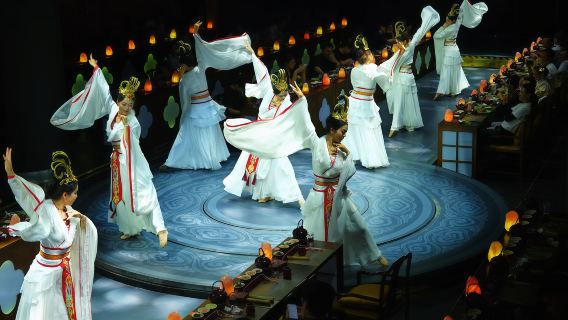
Lass dir diese Attraktionen in Kaifeng nicht entgehen: Millennium City Park, Wansuishan Martial Arts City und Song Du Huangcheng Cultural Tourism Resort. Wenn du Kulturelle Erlebnisse magst, probiere Tagesausflug zum Daxiangguo-Tempel, Shan-Shaan-Gan-Guildhall und Kaifeng Museum in Kaifeng, Henan mit chinesischem und englischem Service aus. Wenn du Speisen und Getränke magst, probiere Kaifeng Song Bankett|Gerichte mit Sichuan-Geschmack von Bian-Hang, ein immersives Erlebnis der Song-Dynastie aus.
Welche Gerichte und Restaurants in Kaifeng sind ein Muss?
Du kannst Kaifeng Song Bankett|Gerichte mit Sichuan-Geschmack von Bian-Hang, ein immersives Erlebnis der Song-Dynastie und Kaifeng Qingming Shanghe Song Palastbankett (Immersives kaiserliches Festmahl des alten China + kulturelles Erlebnis der Speiserituale der Song-Dynastie + kaiserliches Audio-Visual-Erlebnis) ausprobieren. Bitte prüfe vor deinem Besuch online deren Öffnungszeiten und Speisekarten. Reservierungen sind empfehlenswert, besonders zu Stoßzeiten.
Wie kontaktiere ich den Kundenservice von Trip.com?
Erhalte Hilfe innerhalb von 30 Sekunden – jederzeit und überall.Kundenservice kontaktieren
Kann ich meine Buchung ändern oder stornieren?
Die Änderungs- und Stornierungsbedingungen hängen von den einzelnen Attraktionen und Touren ab. Weitere Infos findest du in den Produktdetails.
Wie erhalte ich ermäßigte Preise?
Die Ticketpreise können an Wochentagen und Wochenenden sowie in der Hoch- und Nebensaison variieren. Bei der Buchung über Trip.com kannst du auch Trip Coins nutzen, um zusätzliche Rabatte zu erhalten. Die aktuellen Infos und weitere Tipps zur Buchung von ermäßigten Tickets findest du unter Trip.com.
Auswahl von Trip.com
Beliebte Städte in China
Empfohlene Mietwagen in China
Aktivitäten in HangzhouAktivitäten in SuzhouAktivitäten in ChengduAktivitäten in ShenzhenAktivitäten in DujiangyanAktivitäten in QingdaoAktivitäten in ShanghaiAktivitäten in TaipehAktivitäten in PekingAktivitäten in GuangzhouAktivitäten in YulongAktivitäten in ChongqingAktivitäten in ChinaAktivitäten in YangshuoAktivitäten in Zhuhai
Mietwagen in HongkongMietwagen in ChiayiMietwagen in TaipehMietwagen in HualienMietwagen in GuangzhouMietwagen in ShanghaiMietwagen in TaichungMietwagen in MacauMietwagen in KinmenMietwagen in PekingMietwagen in TaoyuanMietwagen in TainanMietwagen in TaitungMietwagen in HsinchuMietwagen in Shenzhen